
The old way of restocking is cracking under pressure. Retail expectations have permanently shifted.
Retailers no longer tolerate guesswork or delays. They want to order on their phones instantly. They want to track their deliveries in real-time. They want credit at the speed of a click, not after a mountain of paperwork.
Technology is completely dismantling and rebuilding supply chains at a breathtaking pace with its massive, hyper-dense retail network and rapid digital adoption.
And PriyoShop is setting the pace so that our retail ecosystem can keep up with the world.
But before knowing how, take a glimpse of the traditional and past situation of retail in Bangladesh.
Understanding the Traditional Distribution Model
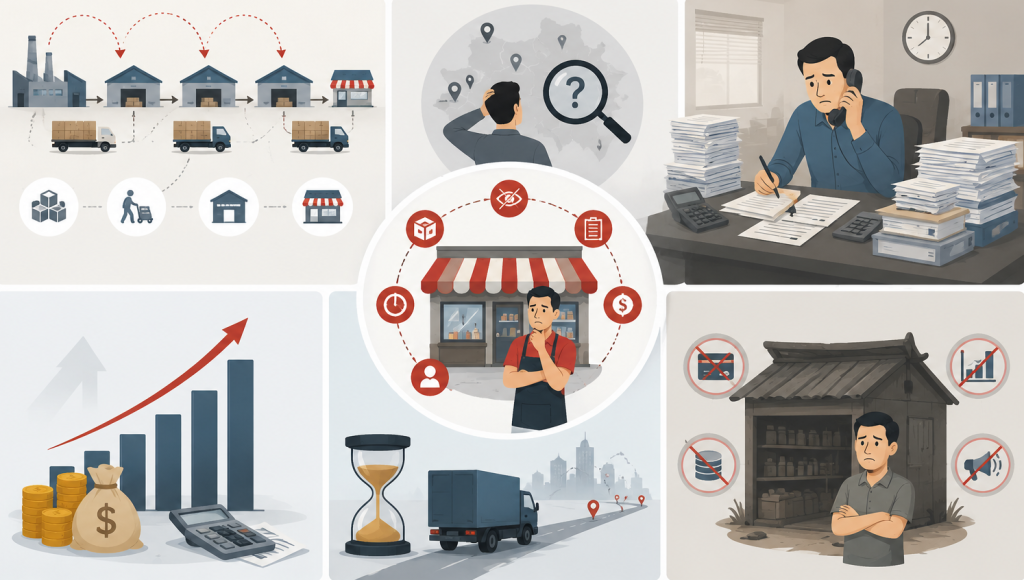
The traditional distribution model was built for a different era. It was slow, expensive and hard to see through. By the time information traveled from a retailer back to a manufacturer, weeks had passed and the opportunity was gone.
Here is what made it so difficult:
Multiple Intermediaries
Products passed through too many hands, like manufacturer, super-distributor, distributor, sub-distributor and retailer. Every layer added cost and delay.
Limited Visibility
Nobody could see the full picture. Brands didn’t know what was selling where. Retailers didn’t know when stock would arrive. Everyone was guessing.
Manual Operations
Orders were taken by phone or paper. Payments were made in cash. Record-keeping was inconsistent. Mistakes were common and expensive.
High Operational Costs
Maintaining a large field sales force, physical warehouses across every region, and manual delivery systems kept costs sky-high for everyone.
Slow Information Flow
By the time demand signals reached the top, the market had already moved. Brands were always reacting, never anticipating.
Excluded Retailers
Small shop owners, the backbone of retail, had the least power. No credit, no data, no voice. They survived on thin margins and goodwill.
Distribution is no longer just about moving boxes from A to B. It is about building infrastructure that powers entire economies.
The Emerging Shift toward Infrastructure-Led Distribution
Around the world, the smartest companies in distribution are not thinking about trucks and warehouses alone. They are building integrated platforms and systems where commerce, logistics, finance and data all work together in one place.
In India, platforms like Udaan and Jumbotail are doing this. In Southeast Asia, Sari-sari store apps are doing this. In Latin America, Mercado Libre has become an entire economic ecosystem. The pattern is the same everywhere: distribution is evolving from a service into infrastructure.
The companies that win are not just moving goods; they are becoming the operating system for retail in their markets.
What will Define the Future of Distribution?
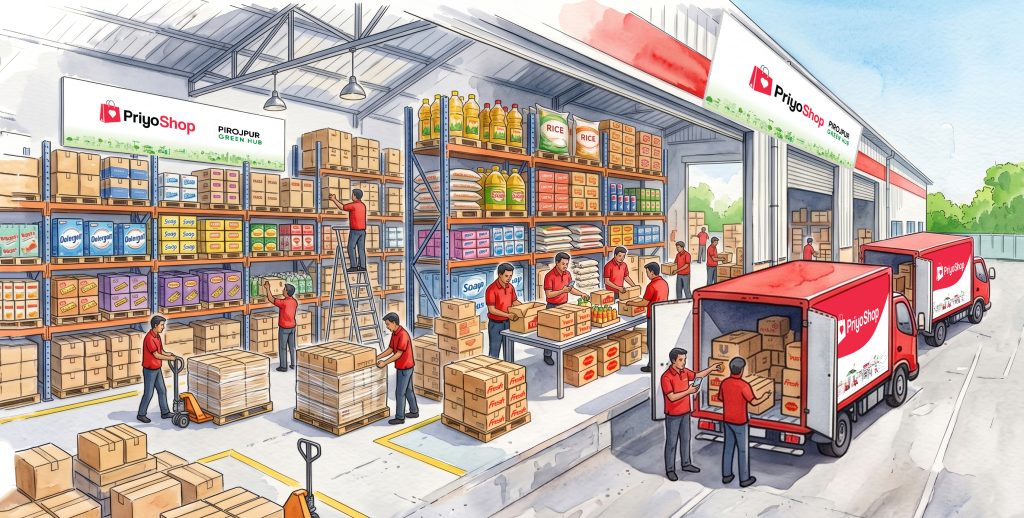
Five capabilities will separate the winners from everyone else. These are not optional upgrades; they are the new table stakes for anyone serious about distribution in the digital age.
– Digital Procurement
– Intelligent Logistics
– Embedded Finance
– Retail Data Intelligence
– Retail Media Networks
Each of these five capabilities is powerful alone. But together, they create something much bigger, a self-reinforcing system where every part makes every other part stronger.
Why Data will Become the New Distribution Advantage
Here is the honest truth about the future: the best logistics network will not win. The best data will.
Whoever sits closest to the retailer and collects the richest picture of what they buy, when they buy and what they need next will have an advantage that is almost impossible to replicate.
Real-time retailer insights will allow platforms to predict demand before it happens. Personalized offers will replace generic promotions. Credit scoring based on purchase behavior will unlock finance for millions of retailers who have never had access before. And better supply planning will mean less waste, lower costs and faster growth for every brand in the system.
Data is not a feature. It is the moat of:
– $200B+ Retail Economy
– 5M+ MSME
– Retailers’ Rapid Digital Adoption
Bangladesh’s Opportunity
Bangladesh has potential and urgency. A $200 billion-plus retail economy built almost entirely on informal, fragmented, traditional distribution.
A massive MSME base, millions of small retailers, who are the lifeblood of communities across the country. A population that has embraced mobile technology faster than almost anyone expected. And a growing demand for financial inclusion from shop owners who have been locked out of formal credit their entire careers.
The conditions that took decades to develop in other markets already exist here. Bangladesh does not need to wait for the right time. The right time is now.
The question was not whether distribution will modernize. It is who will build the infrastructure that makes it happen and who will be left behind.
The Rise of Full-Stack Retail Infrastructure
The future belongs to platforms that do not do one thing well. It belongs to platforms that do everything well together.
Future winners will not operate these capabilities separately. They will fuse them into a single, seamless experience for every retailer they serve.
How PriyoShop is Positioned for this Future
PriyoShop was built from the beginning with one belief: that the retailers of Bangladesh deserve the same infrastructure that powers retail in the most developed markets in the world. Not a simplified version. Not a workaround. The real thing.
We are not building toward a full-stack retail infrastructure platform. We are already building one combining digital procurement, intelligent logistics, embedded finance, retail data intelligence and retail media into a single system that works for the millions of MSMEs who power Bangladesh’s economy.
Running procurement, distribution, credit, data and media as separate businesses is the old thinking. The new thinking is integration. When a retailer orders through the same platform that delivers to them, finances them and helps them understand their own business that is when real value is created.