
Retailer signs up – Order gets placed – Data gets logged in.
In Bangladesh’s retail economy, where millions of retailers power daily commerce but run almost entirely on guesswork, PriyoShop has built something different: a flywheel.
Not a funnel. Not a one-time transaction. A self-reinforcing loop where every purchase makes the next one easier, cheaper, timely and more valuable.
The flywheels help the retailer, the brand and the ecosystem as a whole.
Here is how it works.
Step One: Retailer Signup
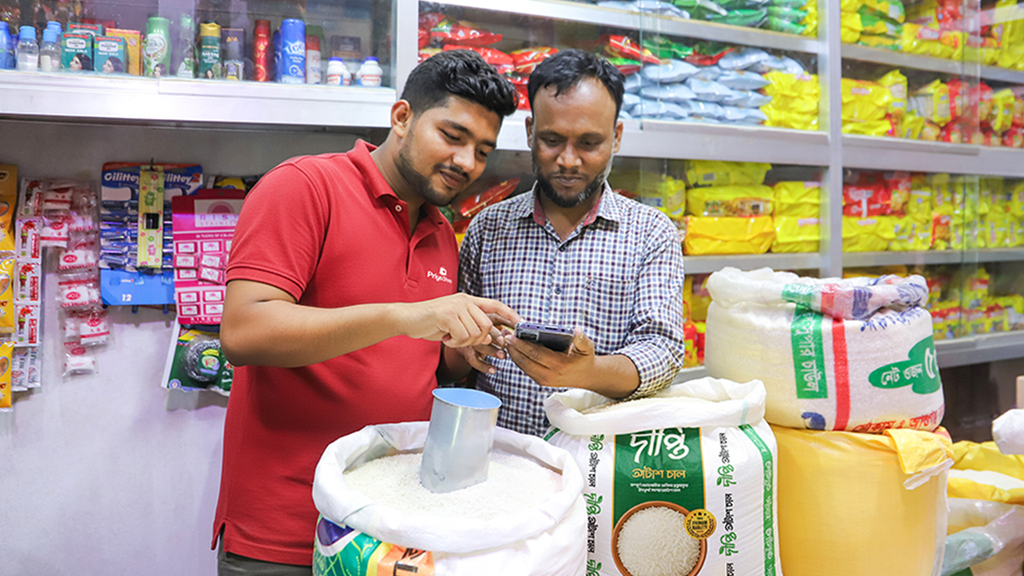
It starts with a retailer joining the platform either through apps or a sales representative. This step brings a retailer who was previously invisible to formal supply chains into a connected network.
No more relying on informal wholesalers, unpredictable stock or cash-only relationships. The retailer now has a digital storefront to the entire distribution system.
Step Two: Purchase Data
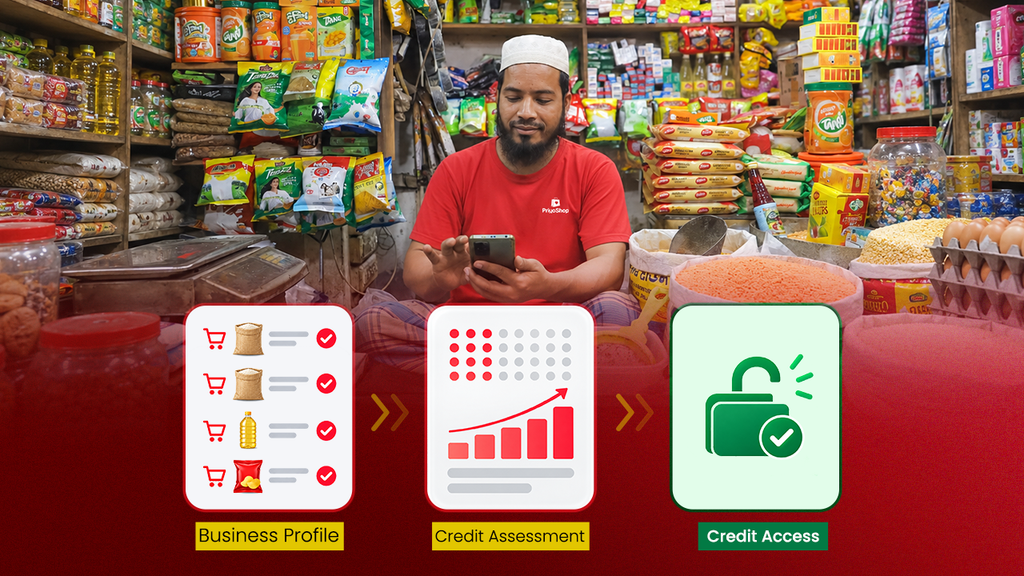
Every order that retailer places generates data. What they buy, how often, in what volume and during which seasons.
This is not just record-keeping. It is the raw material for everything that follows.
In a market where most MSMEs have operated on paper ledgers or memory, structured purchase data is a genuine unlock. It is the difference between a business that reacts and one that plans.
Step Three: Credit Score Improves
This is where the flywheel starts generating real economic value. Purchase history becomes a credit signal.
A retailer who orders consistently, pays reliably and grows their basket size over time builds a track record, one that traditional banks never had access to, because these retailers were never in the formal financial system to begin with.
PriyoShop turns that data into embedded finance:
– Collateral-free credit lines
– Extended directly through the platform
Based on actual transaction behavior rather than paperwork the retailer never had. A retailer who once needed a guarantor and weeks of waiting can now access working capital in the time it takes to check an app.
Step Four: Order Frequency Goes Up
Access to credit changes behavior immediately. A retailer no longer has to under-order out of fear they can’t pay upfront, or delay restocking until cash is on hand.
They order more often, in better volumes, because the capital constraint that used to slow them down has been removed. More frequent ordering means fresher inventory, fewer stockouts and a retailer who can actually meet demand instead of turning customers away.
Step Five: Brand Exclusivity
Here’s where the loop starts pulling in the other side of the market. As retailers order more consistently through PriyoShop, brands start to notice. A platform with real, structured, repeat demand is far more attractive to a brand than a fragmented network of informal wholesalers.
Brands begin favoring PriyoShop as a distribution channel, sometimes exclusively because it’s simply the most efficient way to reach thousands of retailers at once, with visibility into what’s actually selling.
Step Six: Better Margins, More Hubs, a Stronger Moat
Exclusivity and volume compound. Better terms from brands translate into better margins across the network. Better margins fund the build-out of more regional hubs, the physical infrastructure that gets products from warehouse to shop shelf faster and cheaper. More hubs mean shorter delivery times and lower costs, which makes the platform even more attractive to the next retailer considering whether to sign up.
And that’s the loop closing. More hubs support more retailers. More retailers generate more data. More data means better credit decisions. Better credit drives more orders. More orders attract more brand partners. And the wheel spins faster.
Why this Matters More than the Sum of its Parts
The genius of a flywheel is not any single step, it is that each one strengthens the next, and the system compounds instead of resetting. A traditional distribution business grows linearly: more sales reps, more trucks, more cost.
PriyoShop’s flywheel grows structurally: every new retailer makes the data richer, every data point makes credit smarter, every credit decision drives more volume and every unit of volume strengthens the network’s negotiating position with brands.
This is also what makes the model defensible. Anyone can build an app. Far fewer can replicate a live, compounding loop of transaction data, embedded finance, and last-mile infrastructure built specifically around Bangladesh’s MSME retail base. The moat isn’t a feature; it’s momentum.
For Bangladesh’s retail sector, where an estimated tens of millions of livelihoods run through small shops, this matters beyond the balance sheet.
A flywheel that improves credit access, order reliability, and margins for retailers isn’t just a growth engine for PriyoShop, it’s infrastructure for a more resilient, formalized retail economy.
The wheel is turning. Every transaction adds momentum to the next.